
The State of Energy: AI Is Driving Capital Back to Real Assets—Even as War Clouds the Signal.
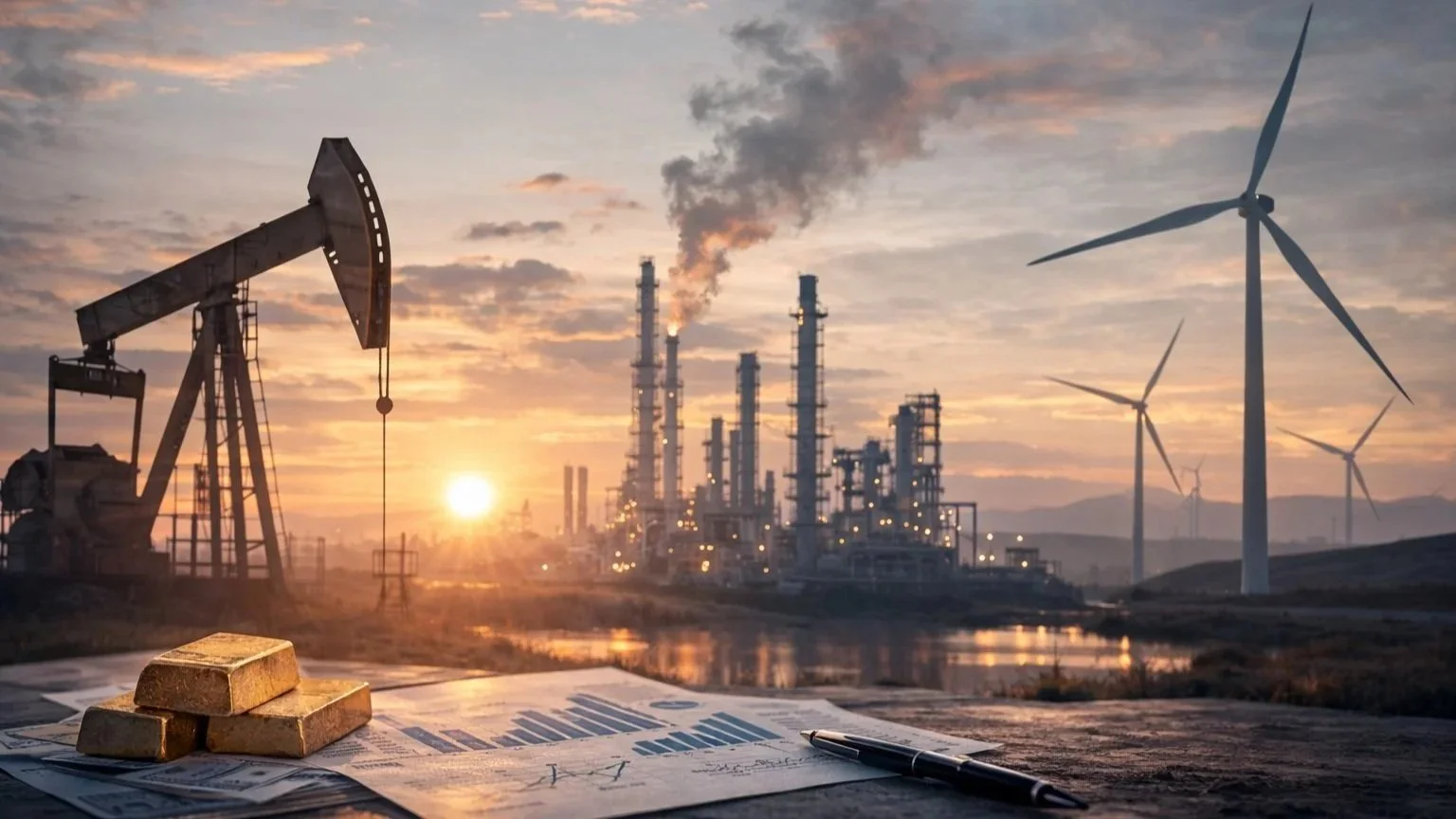
Energy sits (not so quietly) underneath nearly every major story shaping the global economy right now—AI, war, inflation, and the future of industry itself. That reality hit me while watching the State of the Union address a couple weeks back.
But that event wasn’t on my bingo card in context of writing a perspective on the state of energy. Maybe it should have been. I did watch it. And now I’m writing a perspective triggered by what I watched—and by the other major news gripping the globe right now…more on that shortly.
My view of the State of the Union address has grown jaded over the years. It was once an event where patriots celebrated the strength of our nation, regardless of which side of the aisle they sat on. And this nation is still great—but it’s also in a dogfight for its soul.
George Washington started the State of the Union address in person as a practical execution of a constitutional duty; informing Congress about the condition of the nation and recommending legislative priorities, as required by Article II, Section 3 of the Constitution. Thomas Jefferson abandoned the speech format in 1801, opting instead for written reports because he believed the event played out more like a royal address. The written tradition lasted more than a century.
Woodrow Wilson brought back the in-person address in 1913.
Interesting side note: Wilson, a Democrat, wrestled away control of the White House from Republicans for the first time in 16 years. That same year brought the “permanent” federal income tax system we are still shackled to today. 1913 was also the year we were saddled with the Federal Reserve and Congress passed the Underwood-Simmons Revenue Act, which dramatically reduced tariffs.
In time, the address grew into a national event with Coolidge being the first president to broadcast the address on radio and Truman delivering the first televised State of the Union in 1947.
What began as a straightforward report to Congress gradually evolved into a nationally broadcast political event—complete with applause lines, strategic guest placements, and carefully crafted messaging. Critics argue the address has largely outlived its practical usefulness. Instead of serving as a candid assessment for lawmakers, it has become a choreographed media event aimed at shaping public opinion and energizing political bases.
Nonetheless, this most recent State of the Union ended up serving as something of an inflection point and an opportunity to examine the state of energy with Ai driving capital back to real assets—even as war clouds the signal.
About the war… I’ll address it directly shortly.
But first, a little context about me and my mindset. I’m a disciple of Jesus first and foremost. I’m a husband to Jodi for nearly 3 decades, dad to adult daughters Avery and Ayden, Natural Gas developer, aspiring biblical theologian, and Ai enthusiast.
This was made possible by Jesus’ act of grace through faith. It was not a performance-based (thankfully) thing. And it is available to anyone who wants to defeat death and live a glorious eternity with their Creator. And it is way better than the alternative. As Jesus put it to the Rabbi Nicodemus, (paraphrase) whoever does not believe in me stands condemned already.
Regarding my political position (yep, I just hit religion and now politics in the span of about 2 minutes of reading... it will be ok – you are reading in the safety of your bubble), I view myself as independent leaning right. And I believe we are living in a uni-party system (not a 2-party). That’s why I supported Donald Trump in three elections and remain generally supportive of many of his policy instincts—particularly on energy and economic deregulation.
That doesn’t mean I agree with everything about his leadership or personality. Far from it. But in context of evaluating energy policy, I try to focus less on political theater and more on the practical question that actually matters:
Does the policy help markets function and infrastructure get built?
Trump’s style is deeply flawed. His character has obvious weaknesses. But I also don’t know him personally, nor do I know what it’s truly like to carry the weight of that office.
What I do appreciate is that he speaks his mind freely—often disrespectfully, but freely—and that his policy instincts have generally moved in economically rational directions. He has also shown a willingness to adapt when new information becomes clear.
But my allegiance is not to him or any president.
It’s to King Jesus.
Presidents come and go. Empires rise and fall. Trump won’t live forever. Neither will Putin. Neither will Xi. But Christ is King, and everything—markets, governments, and nations—is ultimately under His sovereignty. That’s the framework I bring to markets and business. More practically applied, it is a focus on Biblical stewardship. With that perspective in mind, let’s talk about the state of energy.
Getting Government Out of the Way (And Why That Matters).
One of the most important themes in this administration’s energy policy is simple:
Remove unnecessary barriers and let markets work.
When Trump talks about deregulation in oil and gas, he’s directionally right. The energy industry does not need Washington hawking over it with overreach that disrupts without reason to satisfy extreme, unrealistic agendas.
What it needs is regulatory clarity on sensible environmental protection and safety—and the freedom to operate.
Are we producing more oil and gas than ever? Yes. Is that solely because of Trump? No.
Production increases are mostly the result of:
Capital discipline
Technology innovation
Operational efficiency
Consolidation among producers
Years of scientific advancement
What Trump’s policy has done, at its best, is remove friction. And that matters. We’ve barely moved the rig count in statistically meaningful ways. Production growth isn’t because someone waved a wand in Washington. It’s because the industry matured. Companies are leaner. Smarter. More efficient.
Trump deserves credit not for “creating” production—but for getting out of the way.
Nuclear: Fear, Propaganda, and Reality.
Do we still need a more diverse energy multiverse? One that expands beyond hydrocarbons (oil, gas, coal)? Absolutely. And we have made meaningful strides in accomplishing that. There is utility in every alternative that has scaled including solar, wind, hydro, and yes nuclear.
Yet despite discovering nuclear fission in 1938 and channeling it for producing electricity in 1951, the globe has absolutely shunned the technology. For decades, nuclear energy has been psychologically handicapped in America. After events like Three Mile Island and Chernobyl, cultural fear overwhelmed scientific context. Hollywood amplified that fear with films like The China Syndrome.
The result? America scared itself out of long-term nuclear expansion. Today the United States has nearly 100 active nuclear facilities. Even if we doubled that number, it would barely put a dent in the compounding demand for electricity.
And demand is most definitely compounding. Nuclear is part of the long-term solution. But scaling it requires years of construction, regulatory reform, bipartisan support, and a trained workforce of nuclear engineers.
You can’t flip a switch and scale nuclear overnight. Encouraging nuclear development is good policy. But it’s a decade-scale play—not a three-year play. And in the meantime, the energy reality remains the same: The global economy still runs on hydrocarbons (and ironically the alternative energy sources of solar, wind, and hydro – all run on hydrocarbons too – blog on that coming soon).
The Demand Driver: Artificial Intelligence.
Artificial intelligence has moved beyond theory and novelty. It is now embedded in logistics networks, financial markets, manufacturing automation, defense infrastructure, and nearly every layer of modern software.
The technology may feel digital. But its foundation is deeply physical. AI requires immense computational power. Computational power requires electricity. And electricity requires energy generation and infrastructure at scale. That chain is often overlooked.
The scale of electricity required to support large AI models is staggering. Massive computing clusters run continuously, drawing enormous amounts of power while cooling systems work equally hard to prevent those systems from overheating.
Electricity demand from data centers that once measured in tens of megawatts is now pushing into the hundreds. The next generation of hyperscale data centers is expected to move toward gigawatt-level power consumption. That kind of growth has enormous implications for energy markets.
Today, natural gas already represents the largest fuel source powering the U.S. electric grid, supplying nearly half of the electricity generation that keeps modern infrastructure operating.
And the demand for electricity is expected to rise sharply. Some forecasts tied to AI infrastructure suggest grid demand growth equivalent to adding the power consumption of roughly forty million households by the end of the decade. To put that into perspective, that’s like adding the combined electricity demand of states such as California, Texas, New York, and Florida to the grid. And that power has to come from somewhere.
Technology companies are beginning to understand this reality. Many of the largest players in artificial intelligence are no longer thinking like software companies alone. They’re thinking like utilities. They are studying grid infrastructure. They are negotiating long-term power contracts. Some are investing directly in power generation. Others are exploring microgrids and dedicated energy infrastructure to support their data centers.
In other words, the digital economy is colliding directly with the physical limits of energy production. That collision is beginning to reshape energy markets.
Artificial intelligence may dominate headlines. But AI doesn’t run on algorithms. It runs on electricity.
And electricity still runs on energy infrastructure that somebody has to build, fuel, and maintain.
Understanding that reality naturally leads to the next question: Where will the energy come from? Because the companies, investors, and leaders who understand that relationship will be the ones positioned to build the infrastructure powering the next phase of economic growth.
The War and the Energy Market.
Ok. Time to address the other major event shaping energy markets right now: the war on the Iranian regime.
I believe there are legitimate merits to confronting this regime. Note, I am not an Israel apologist or a blind supporter of war. People in Israel need Jesus like anyone else not saved.
War carries a crushing gravity—lives are placed in harm’s way, families are scarred for generations, and the moral responsibility behind that decision is almost impossible to fully comprehend from the outside. Going to war doesn’t mean every decision surrounding the conflict is perfect or that the timing cannot be debated. Geopolitics rarely offers clean answers, and I remain open to new information and differing perspectives.
But several realities are difficult to ignore.
Iran is not simply another energy-producing nation operating inside global markets. It is a country ruled by a regime using an iron fist for nearly 50 years—serving as the clear leader of state-sponsored terrorism, suppressing internal dissent with unspeakable violence, destabilizing neighboring regions, and repeatedly signaling hostility toward Western economic systems.
At the same time, Iran holds enormous influence within the global energy system. Oil, Natural Gas, and Coal are not just regular commodities. They remain the primary fuels powering the global economy. The natural progression of this fact is that the modern global economy still rests on what is often referred to as the petrodollar system—where oil trade drives global currency flows and financial markets. From that perspective, the military is not the objective. It is a tool used to execute broader strategic and economic priorities aimed at stabilizing the systems that underpin global commerce.
None of this eliminates debate around the conflict. But it does explain why the stakes extend far beyond a simple geopolitical dispute.
As for energy markets, the impact is not yet clear—and it likely won’t be for some time. War introduces layers of uncertainty into the global energy system. Infrastructure risks increase. Shipping becomes more complex. Insurance costs rise. Supply chains tighten.
Those pressures often push commodity prices higher in the short term. At first glance, that may sound beneficial for energy producers. But sustained price spikes rarely produce healthy markets. When oil and natural gas prices rise sharply and remain elevated for extended periods, the result is often demand destruction. Transportation costs rise. Manufacturing margins compress. Consumers adjust behavior. Economic activity slows—and energy consumption eventually follows.
That dynamic ultimately circles back and hurts the very industry that initially benefits from higher prices. Energy markets function best when pricing is driven by strong economic demand and disciplined supply, not geopolitical disruption.
Even if the conflict resolves soon—and hopefully it does—the market will likely suffer ripple effects for months. Energy infrastructure does not recover overnight. Pipelines, export facilities, processing plants, and shipping networks can remain disrupted long after the shooting stops. Supply constraints could persist for the next 12–18 months as infrastructure is repaired and supply channels normalize.
The industry understands this dynamic. Despite the volatility in commodity markets, producers are not rushing to dramatically increase supply. After several years of lower prices and tighter margins, companies are approaching the current environment cautiously.
Capital discipline remains the dominant theme. Producers want healthy pricing—but not runaway spikes that ultimately damage long-term demand. Because the healthiest energy markets are the boring ones. Not markets driven by conflict. Not markets driven by fear. Markets driven by fundamentals.
The same fundamentals that ultimately determine whether the infrastructure powering artificial intelligence—and the modern economy itself—can continue to grow.
For Investors: Look Beneath the AI Narrative.
When major technological shifts happen, investors tend to rush toward the most visible part of the story. It has happened repeatedly throughout modern market history.
During the dot-com boom, investors chased websites while largely overlooking the infrastructure that made the internet possible—fiber networks, data centers, server manufacturers, and telecommunications equipment.
During the shale revolution, many investors chased acreage while overlooking the companies building pipelines, compression systems, drilling equipment, and service infrastructure that made the boom scalable.
We’re watching the same dynamic unfold again. Artificial intelligence is dominating headlines—and for good reason. The technology is transformative. But the companies building software models represent only one layer of the system. Beneath that layer sits something far more fundamental. Electricity generation. Grid infrastructure. Fuel supply. Transmission capacity.
Artificial intelligence may capture attention, but the technology cannot scale without a massive expansion of the physical systems that power it. Every AI model trained. Every server rack installed. Every hyperscale data center built. All of it ultimately depends on electricity. And electricity depends on energy infrastructure.
That’s where the deeper investment logic begins to emerge. Instead of asking: “Which AI company will win?” A more useful question may be: What infrastructure must expand for AI to exist at scale?
That question points toward a very different set of opportunities:
Power generation infrastructure.
Natural gas supply chains.
Turbine and generator manufacturing.
Grid modernization and transmission expansion.
Microgrid development supporting localized data center demand.
These systems are not speculative narratives. They are the physical backbone of modern economies. When electricity demand expands rapidly, the infrastructure required to support that demand expands with it. And that infrastructure tends to attract capital.
War and geopolitical instability can temporarily cloud that signal. Commodity prices can spike. Supply chains can tighten. Markets can become volatile. But those disruptions rarely change the underlying structural forces driving long-term demand. Artificial intelligence still requires electricity. Electricity still requires energy. Energy still requires infrastructure. And infrastructure is a real asset.
That’s why the most durable opportunities in technological revolutions often sit one layer beneath the headlines. Not in the software. But in the systems that make the software possible.
One important note: I am not a financial advisor, and nothing in this article should be interpreted as financial advice. These observations reflect my perspective as someone operating within the energy industry and observing structural changes in the market. Investors should conduct their own due diligence and consult their own advisors before making investment decisions.
The point here is not to recommend specific investments. The point is to recognize where the underlying economic forces are pointing. And right now, those forces are pointing back toward something markets have periodically forgotten:
Real assets.
Infrastructure.
Energy.
The physical systems that power the modern economy. And the systems that will power whatever comes next.
A Biblical Stewardship View of Markets.
Most commentary about markets and policy divides quickly along political lines. My framework is different. It’s Biblical.
Scripture consistently presents stewardship as one of the central responsibilities of human life. The idea appears repeatedly throughout the Bible: resources entrusted to us are meant to be managed wisely, multiplied responsibly, and deployed productively.
Jesus speaks directly to this in the Parable of the Talents. In that story, servants are entrusted with resources by their master and expected to put them to work. Faithfulness is measured not by passive preservation, but by wise stewardship that produces growth and benefit.
That principle applies far beyond personal finance. It applies to leadership. It applies to businesses. And it applies to markets. Energy production is stewardship. Capital allocation is stewardship. Building infrastructure that powers economies and improves human flourishing is stewardship.
When people hear the word stewardship, they often think in narrow or purely religious terms. But the Biblical application is much deeper. It recognizes that human beings are entrusted with the care and development of the world around them. That includes natural resources, economic systems, institutions, and communities.
Energy is one of the most important resources entrusted to modern civilization. Without it, economies stop. Infrastructure fails. Supply chains collapse. Hospitals go dark. Communication systems disappear.
The ability to produce, distribute, and manage energy responsibly is therefore not just an economic activity. It is part of the broader responsibility of stewardship. Markets, when functioning properly, can serve that stewardship role remarkably well. They allocate capital toward productive uses. They reward innovation. They penalize waste.
And they create incentives for people to solve real problems. That doesn’t mean markets are perfect. Human institutions never are. Markets can become distorted when speculation replaces production, when political intervention overrides economic reality, or when short-term thinking dominates long-term responsibility.
Biblical stewardship pushes in the opposite direction. It calls for discipline over impulse. Production over speculation. Responsibility over exploitation. It calls for building systems that serve people and strengthen society rather than extracting value from them.
That perspective shapes how I view energy markets. Not as a place to chase quick gains. But as a place to build and steward real assets that sustain modern life. Because the infrastructure that powers the world is not abstract. It is pipelines moving fuel. It is turbines generating electricity. It is power plants keeping cities running.
And the people responsible for developing and managing those systems carry a responsibility that extends beyond profit and loss statements. They are stewards of resources that millions of people depend on every single day. In that sense, energy infrastructure is more than an industry. It is part of the foundation that allows societies to flourish.
And stewarding that foundation well is both an economic responsibility and a moral one.
What We’re Doing at PetroVybe.
PetroVybe is an oil and gas development company prioritizing the development of Natural Gas. And we are not theorizing about these trends. We’re building directly into them.
Our current development program—PetroVybe ONE—is built around a simple premise: align natural gas production with the accelerating electricity demand being driven by artificial intelligence and data center infrastructure.
Artificial intelligence may dominate headlines. But AI doesn’t run on software alone. It runs on electricity. And electricity increasingly runs on natural gas.
Natural gas already represents the largest fuel source powering the U.S. electric grid, supplying nearly half of the electricity generation that keeps modern infrastructure operating. AI-driven data center expansion is expected to dramatically increase electricity demand in the coming decade—equivalent to tens of millions of additional households worth of power consumption.
Meeting that demand requires something the digital economy cannot create on its own: Energy infrastructure.
The PetroVybe ONE development strategy focuses on building and scaling tangible natural gas assets designed to feed directly into that expanding electricity market. The PetroVybe Formula is designed to maximize MOIC (Multiple on Invested Capital). Producing a multiple is a principle sourced from the parable of the talents in Matthew 25:
PROTECT. Acquire legacy production and execute targeted workovers and optimization projects.
SCALE. Growth through new drilling opportunities identified through geological and production data and reinvest cash flow to compound output over time.
The objective is not a single drilling outcome. It is a system designed to compound production and asset value. The capital structure reflects that philosophy—combining partner equity, credit facilities, and reinvested operating cash flow to expand the asset base. Transparency and accountability remain central principles of the PetroVybe Formula, including independent engineering review and third-party validation of project performance.
Ultimately, PetroVybe exists to do something straightforward: Produce energy responsibly. Scale assets intelligently. And position natural gas production to serve one of the fastest-growing sources of electricity demand the world has ever seen.
Artificial intelligence may dominate the conversation. But behind that conversation sits something much more fundamental.
Energy.
And someone still has to produce it.
The Return to Real Assets.
For much of the past two decades, financial markets have been dominated by abstraction. Software valuations. Financial engineering. Digital platforms. Speculative growth narratives.
Much of that innovation has been valuable. But beneath the surface, something fundamental never changed. Modern civilization still runs on physical infrastructure. Pipelines move energy. Power plants generate electricity. Transmission lines carry power across continents. Steel, concrete, turbines, compressors, drilling rigs, and power stations form the physical backbone of the global economy.
And that backbone is suddenly back in focus. Artificial intelligence requires electricity. Electric vehicles require charging infrastructure. Manufacturing reshoring requires reliable power. Data centers require stable grid capacity. In short, the digital economy still depends on the physical world.
That reality is beginning to pull capital back toward infrastructure, energy production, and other tangible assets that create real economic output. Natural gas, in particular, sits at the center of this transition. It is abundant, scalable, and capable of generating the electricity required to support the next generation of computing infrastructure.
For investors, this shift represents something important.
Markets may cycle through narratives, technologies, and political trends. But eventually they return to fundamentals. And few fundamentals are more foundational than energy.
The same forces driving the explosion of artificial intelligence—electricity demand, grid reliability, and energy security—are also driving a broader return to tangible infrastructure.
Real assets. Assets that produce something. Assets that power economies. Assets that sit at the intersection of technology, energy, and physical infrastructure.
Artificial intelligence may be the technology story of this decade. But energy is the foundation that allows that story to exist. And the investors, companies, and leaders who understand that relationship will be the ones positioned to build the systems that power the next era of economic growth.
Best,

Disclaimer. This blog is for education purposes only. It is not an offer to sell securities. I am not a financial advisor and I don’t play one on tv either.
